If you work for Scotiabank, it is important to understand how the Trump Administration’s enforcement of anti-corruption, sanctions and money laundering regulations can affect you. In brief, our analysis shows:
- New enforcement priorities will likely increase U.S. regulatory scrutiny on foreign banks.
- Employees of foreign banks, particularly those publicly traded in the U.S., need to know their options when they encounter misconduct.
- The Trump Administration has shown a commitment to supporting and rewarding whistleblowers, meaning there are more opportunities than ever for bank employees to anonymously report misconduct through U.S. whistleblower programs.
Trump Administration Targeting Foreign Companies
Employees of foreign-headquartered banks often assume their employer will ensure that their role and responsibilities comply with U.S. laws. Numerous enforcement actions have shown that even strong internal controls can fail to prevent large and systemic compliance breaches. The risk of compliance failures is ongoing, and recent shifts in U.S. enforcement priorities create added personal risk for employees.
The Trump Administration, through the Department of Justice (DOJ), has sought to overhaul law enforcement priorities. While much of this focus has been domestic, a number of developments directly affect employees at non-U.S. banks.
Of note, the Administration has expressed concern that foreign companies gain a competitive advantage over U.S. companies through non-compliance:
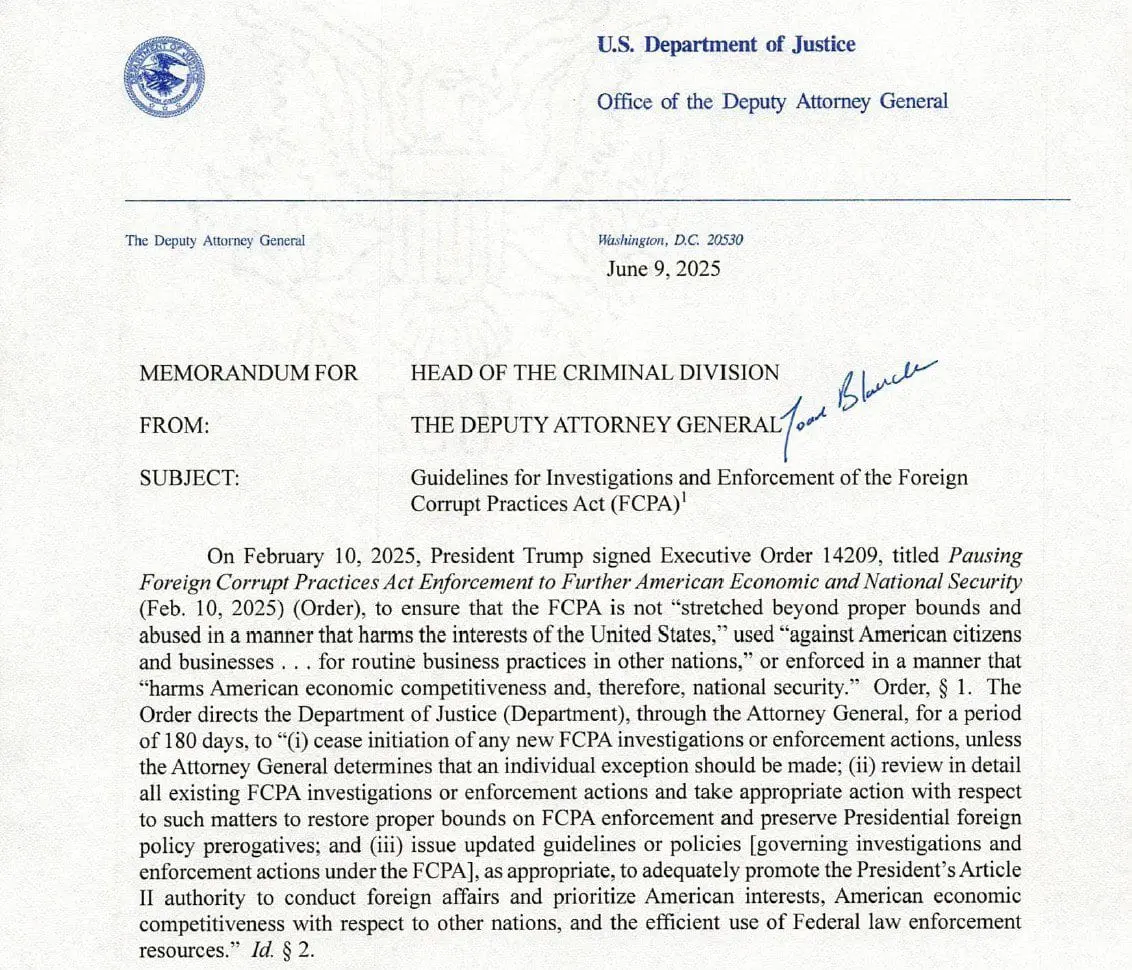
“The most blatant bribery schemes have historically been committed by foreign companies” (Department of Justice (DOJ) guidelines on FCPA prosecution)
Although not explicitly stated, the DOJ has closed several major investigations into U.S. companies while foreign companies appear not to have received similar deference. As a result, we believe foreign companies will face increasing regulatory scrutiny during this Administration, and that scrutiny can reach individual employees.
Scotiabank employees should pay close attention to these developments. Scotiabank conducts U.S. dollar clearing and other banking activities in the United States and has U.S.-listed securities. This means conduct involving non-dollar transactions, outside the U.S., by non-U.S. employees, could still trigger violations of federal laws such as:
-
The Foreign Corrupt Practices Act (FCPA);
-
U.S. sanctions laws; and
-
Anti-money-laundering/Bank Secrecy Act (AML/BSA) rules.
While all Scotiabank employees could be affected by these developments, employees in compliance, internal audit, treasury, operations, legal or finance have a higher likelihood of encountering issues such as:
-
Transfers, payments or business involving foreign officials where there is a risk of bribery or kickbacks (FCPA)
-
Transactions processed or cleared that involve third parties that pose a risk of involving sanctioned entities or jurisdictions
-
Internal controls or compliance programs that fail to monitor or escalate unusual transactions, particularly where they touch U.S. persons or U.S. financial infrastructure (AML/BSA).
What Does It Mean for Employees?
Although foreign-headquartered banks may face greater scrutiny, the Administration has strengthened support and rewards for whistleblowers who provide information relating to financial crime or FCPA violations. Several U.S. whistleblower programs offer protections and financial incentives:
-
The SEC whistleblower program allows anonymous reporting of securities law violations, including bribery, kickbacks and accounting fraud;
-
The FinCEN AML whistleblower program enables confidential reporting of AML and sanctions violations;
-
The DOJ whistleblower program allows confidential reporting of sanctions, money laundering, AML and FCPA violations, with potential for financial reward.
On May 12, 2025, Matthew Galeotti, head of the DOJ’s Criminal Division, issued a memorandum expanding the types of cases eligible for DOJ whistleblower rewards. The expanded program offers significant financial incentives, up to 30 percent of the first 100 million dollars in net proceeds forfeited, for actionable information provided to the DOJ. Combined with whistleblower programs at the SEC, CFTC and FinCEN, employees now have more options than ever to report misconduct confidentially and potentially benefit from financial compensation.
How Can an Employee Use a Whistleblower Program?
Almost any employee can participate in a federal whistleblower program if they provide original information that is not protected by attorney client privilege. Even individuals involved in the misconduct may report and seek a reward. However, participation does not grant immunity from prosecution. Employees should always consult an attorney before reporting to federal authorities. Anonymous reporting is usually available if an attorney licensed in the U.S. files on the employee’s behalf. Speaking with a qualified lawyer early can help ensure appropriate legal guidance.
Important Information
FTI Law is a whistleblower law firm in New York. This article is provided for educational and general informational purposes only. It does not constitute legal advice and should not be relied upon as such. Reading this article does not create an attorney-client relationship with FTI Law. If you require legal advice about your situation, please click here to contact us for a free and confidential evaluation. You may also take FTI Law’s Online Whistleblower Evaluation.